Land Rent And Lease Tracking: Getting Cash Rent, Crop Share, And Custom Farming Straight In Your Books
Key Takeaways
Cash rent, crop share, and custom farm lease arrangements each create different accounting entries, and mixing them up distorts your true per acre profitability. CenterPoint Accounting for Agriculture supports multi-entity and enterprise level tracking, giving operations searching for farm accounting software, farm lease tracking, or farm rent management a clear way to separate owned, rented, and shared ground in the same set of books.
Why Lease Type Changes Your Farm Lease Accounting
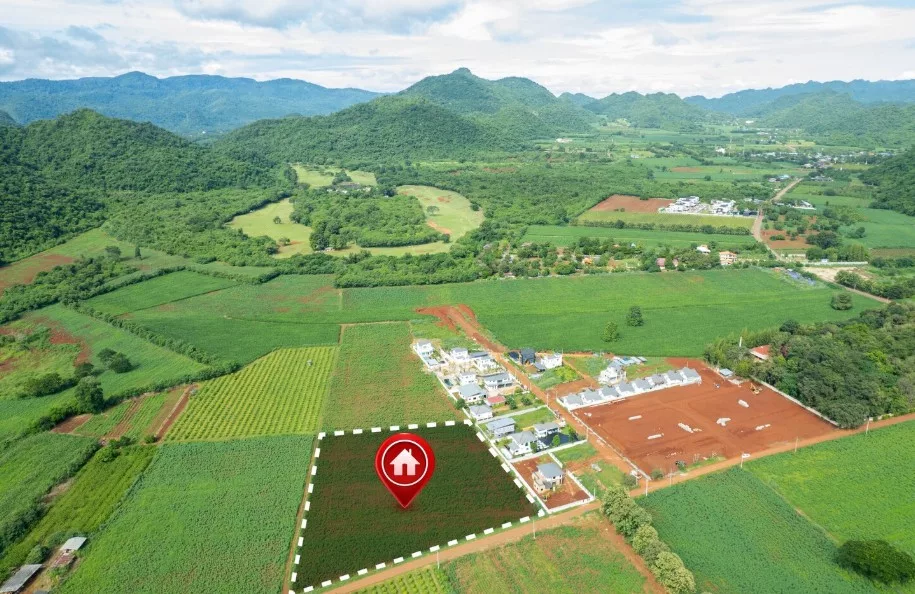
Not all farmland arrangements work the same way, and your books need to reflect that difference. A cash rent agreement is straightforward on paper, a fixed payment for the use of the ground, but it still needs to be allocated correctly against the specific acres it applies to if you want an accurate per acre profitability picture. A crop share arrangement is more complex, since the landlord takes a percentage of the actual crop or crop revenue rather than a flat payment, which means your revenue recognition and expense allocation both need to reflect the share agreement precisely. Custom farming, where you are paid to perform specific field operations for someone else’s ground rather than farming it as your own, is different again, generating service revenue rather than crop revenue.
Treating all three the same way in your accounting, or worse, not separating them at all, makes it nearly impossible to know which ground is actually earning you money and which is barely breaking even.
What The Cash Rent Numbers Actually Look Like Right Now
Cash rent has become a bigger part of the profitability equation in recent years. According to USDA’s National Agricultural Statistics Service, the national average cash rent for cropland was $161 per acre in 2025, up slightly from 2024, while irrigated cropland averaged $244 per acre. You can review the full report at https://www.nass.usda.gov/Publications/Highlights/2025/2025LandValuesCashRents_FINAL.pdf.
These figures come from a serious data collection effort. NASS contacts approximately 280,000 farms and ranches each year as part of its Cash Rents Survey, gathering total acres operated and acres rented for cash across irrigated cropland, non-irrigated cropland, and permanent pasture. You can learn more about the survey methodology at https://www.nass.usda.gov/Surveys/Guide_to_NASS_Surveys/Cash_Rents_by_County/. That scale of data collection reflects just how significant rented ground is to the overall farm economy, and how much it matters to track it accurately at the individual operation level.
Pastureland tells a somewhat different story than cropland, which is exactly why lease type specific tracking matters. The American Farm Bureau Federation reports that cash rent for pastureland held flat at $16 per acre nationally even as cropland cash rent reached a record high, a reminder that a single blended rent assumption across different types of ground will misrepresent both categories. You can review that analysis at https://www.fb.org/market-intel/real-estate-rising-farmland-values-hit-record-high.
Why Blended Numbers Hide Which Ground Is Actually Working For You
If your accounting system lumps all your acres together regardless of tenure, a strong performing owned parcel can quietly mask a rented parcel that is barely covering its cash rent, or vice versa. That matters at renewal time, when you are deciding whether to renew a lease at the landlord’s asking rate, negotiate, or walk away from a parcel that has not been pulling its weight. It also matters when you are evaluating whether to pursue additional rented ground at all, since the answer depends entirely on whether your current rented acres are actually profitable once cash rent, inputs, and labor are factored in separately from your owned ground.
How CenterPoint Handles Multiple Lease Types In One System
CenterPoint Accounting for Agriculture lets you set up enterprises by field, by lease, or by landlord, so cash rent payments, crop share splits, and custom farming revenue are all tracked distinctly rather than blended into one farm wide number. Multi-entity accounting means you can separate owned ground from rented ground cleanly, and enterprise level production analysis means you can see cost per acre and cost per bushel broken out by parcel, not just by crop.
For crop share arrangements specifically, this matters even more, since the landlord’s share needs to be tracked as it happens throughout the season rather than reconciled after the fact at harvest. Getting that wrong creates confusion at tax time and can create real friction with a landlord who expects a specific accounting of their share.
Custom Farming Revenue Deserves Its Own Category Too
If you perform planting, spraying, or harvesting services for other operations in addition to farming your own ground, that revenue is fundamentally different from crop sales and should be tracked separately. Custom farming income does not carry the same input costs or price risk that your own crop revenue does, and blending the two together in a single revenue line makes it much harder to evaluate whether your custom work is actually profitable once fuel, labor, and equipment wear are factored in.
What This Looks Like At Renewal And Renegotiation Time
Landlords increasingly expect a data driven conversation at lease renewal, particularly as cash rent has climbed in many regions over the past several years. Walking into that conversation with clear, parcel specific data on what a piece of ground has actually returned gives you a much stronger negotiating position than a general sense of how the year went. It also protects you from renewing a lease at a rate that no longer makes sense given current commodity prices and input costs, a decision that is much easier to make with hard numbers in front of you.
Why This Should Live In Your Accounting System, Not A Side Spreadsheet
A lot of operations track lease terms, rent due dates, and share percentages in a separate spreadsheet or even a paper file, disconnected from the actual accounting entries. That approach works until the spreadsheet falls out of sync with reality, which tends to happen exactly when you need the numbers most, like during a renewal negotiation or an operating line review with your lender. Keeping lease and rent data inside the same system as your actual transactions means the numbers stay accurate automatically, without a separate reconciliation step every time something changes.
See How Your Own Ground Breaks Down By Lease Type
If you currently know your whole farm profitability but not how your owned, cash rented, and crop share ground compare to each other, it is worth seeing what parcel level tracking looks like on your own operation. Red Wing Software offers a free demo where a real person walks through how CenterPoint handles multiple lease types across your specific fields.
CATEGORIES
RELATED POSTS



More from the blog

Full Audit Trail Explained: Why Every Transaction Should Be Traceable Back To Its Source

Five Budget Reporting Mistakes Local Governments Should Avoid