Payroll For Piece Work Crews: Handling Seasonal And Hourly Ag Labor Without A Headache
Key Takeaways
Piece work and seasonal crews create payroll complexity that generic small business payroll software was never built to handle, from mixed pay structures to fluctuating hours. CenterPoint Payroll from Red Wing Software is built for farm payroll software needs, including seasonal ag labor, piece rate tracking, and Form 943 filing, so operations searching for farm payroll software or agriculture accounting software get a system that matches how their crews actually work.
Why Piece Work Payroll Breaks Generic Software
If your crew gets paid by the bushel, the row, the bin, or the hour depending on the task and the season, you already know that most payroll software assumes something simpler. Generic small business payroll tools are built around a single pay rate per employee, a standard forty hour week, and a workforce that looks roughly the same in January as it does in July. Farm labor rarely works that way.
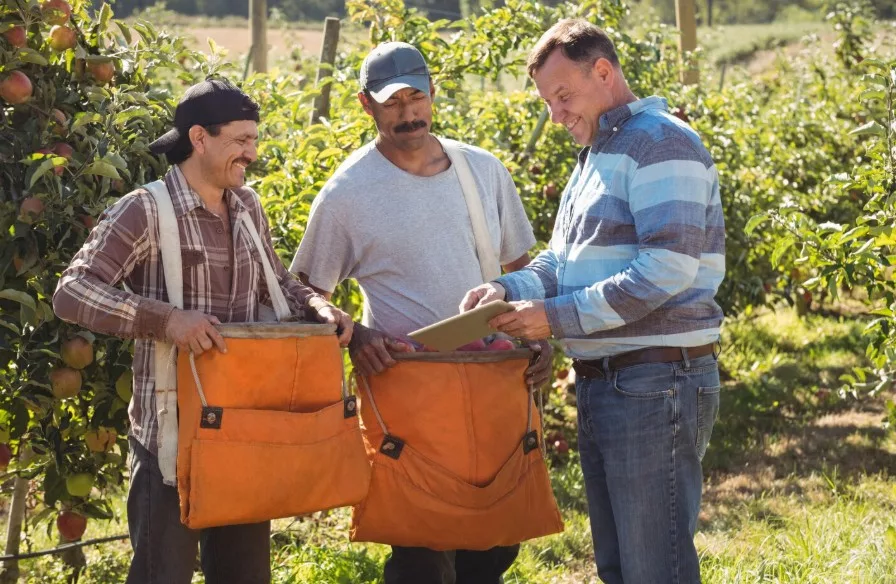
A single worker might pick up piece rate pay during harvest, hourly pay during calving season, and a flat day rate for fence repair in between. Multiply that across a crew of ten, fifteen, or twenty five seasonal and full time employees, and manual tracking turns into hours of reconciliation every pay period.
The Scale Of Seasonal Ag Labor
This is not a niche problem. Agricultural employment authorization data compiled by the Congressional Research Service shows that approximately 27 percent of hired agricultural workers are citizens, 16 percent are in the United States on H-2A visas, 22 percent have other work authorization, and 35 percent have no legal work authorization, meaning most farm payroll systems have to handle a genuinely mixed workforce, not a uniform one. You can review that data directly at https://www.congress.gov/crs_external_products/IF/HTML/IF12979.html.
Reliance on temporary seasonal labor has also grown sharply. According to the USDA Economic Research Service, the number of H-2A positions certified has increased more than sevenfold over eighteen years, from just over 48,000 positions in fiscal year 2005 to around 385,000 in fiscal year 2024. That data is available at https://www.ers.usda.gov/data-products/chart-gallery/chart-detail?chartId=86844. Whether or not your operation uses the H-2A program directly, that trend reflects a broader shift toward more seasonal, more variable, and more complex farm labor across the industry.
What A Farm Built Payroll System Needs To Handle
CenterPoint Payroll was built with this reality in mind, not retrofitted from a generic small business payroll product. That means support for piece rate pay alongside hourly and salaried pay in the same pay period, without forcing you into workarounds or spreadsheets on the side. It means tracking hours and pay by task, by field, or by crew, so your labor costs actually connect back to the work being done. And it means handling the seasonal swings in headcount that come with planting and harvest without requiring you to set up and tear down employee records every few months.
Form 943, Not An Afterthought
Farm employers file Form 943 for agricultural employees rather than the standard Form 941 most small businesses use. That distinction matters more than it might seem. Software built primarily for retail or service businesses often treats agricultural payroll tax filing as a secondary feature, if it supports it at all. CenterPoint Payroll treats Form 943 filing as a core function, along with the specific withholding and reporting rules that apply to farm labor.
Direct Deposit And Employee Access
Seasonal and piece work crews still expect to get paid accurately and on time, and they still want visibility into their own pay. Red Wing’s Direct Deposit Services and Employee Portal give your crew a way to see pay stubs and payment history without you fielding a phone call every Friday asking whether the deposit went through. For an operation running fifteen to thirty employees during peak season, that alone can save real administrative time.
Keeping Piece Rate Pay Fair And Accurate
Piece rate work only functions well when the counting is accurate and the pay reflects it. Whether you are tracking bins picked, rows completed, or head processed, the underlying math needs to be simple to enter and easy to audit later if a question comes up. Building that tracking directly into your payroll system, rather than keeping a separate tally on a clipboard that gets transcribed later, cuts down on both errors and disputes.
Where This Fits Into Your Broader Accounting
Payroll does not exist in isolation from the rest of your books. CenterPoint connects payroll data directly into your farm’s overall accounting, so labor costs show up correctly against the right crop, field, or enterprise. For an operation running both crops and livestock, that means your alfalfa acres and your cow calf herd each carry their own accurate labor cost, rather than one lump sum that tells you nothing useful at tax time.
A System Built Around How Farms Actually Pay People
Red Wing Software has spent decades working with farm operations that run exactly this kind of mixed, seasonal, piece rate payroll. CenterPoint Payroll reflects that experience directly, rather than treating agriculture as a special case bolted onto a generic system.
If your current payroll process involves a spreadsheet, a calculator, and a prayer every other Friday, it is worth seeing what a purpose built system looks like on your own crew’s numbers. Red Wing offers a free demo where a real person walks through how CenterPoint Payroll handles your specific mix of hourly, piece rate, and seasonal labor.
CATEGORIES
RELATED POSTS


More from the blog

Fund Accounting Basics Every Nonprofit Administrator Should Know
How to Stay Ahead of W-2 and 1099 Filing Deadlines